
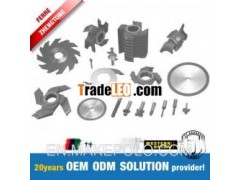

 Click image to view full size image


Description:
Wood Cutter1)Suitable for hard and soft wood.
2)Strong and sharp cutting edge
3)Smooth planing
Sharp Edge Hard and Soft Wood Cutter
WoodworkingTools Description:
We produce a wide range of standard and special carbide tools for woodworking,
such as saw blades, profile cutters, router bits, shaper cutters, reversible knife,
drill bits,wood cutter heads and planer knives, Woodworking tools are suitable for
hard tropical wood, wood with knots and soft wood, which have high hardness,
strength and long service life for their finerain structure and HIP sinter, hot processed,
make them very excellent in all the properties. Other nonstandard woodworking tools
can be supplied at customer''s requests.
Wood CutterRecommended:
WoodCutter Display:
WoodCutter Application Field:
Q:What is cemented carbide?
A:Cemented carbide is a hard materialused in machining tough materials such as carbonsteel or
stainless, as well as in situations where other toolswould wear away, such as high-quantity
productionruns. Most of the time, carbide will leave a better finish on thepart, and allow faster
machining.Carbide tools can also withstand higher temperatures thanstandard high speed steel tools.
Q:Whatis the difference between cemented and tungstencarbide?
A:Cementedcarbides consist of hard grains of the carbides of transitionmetals (Ti, V, Cr, Zr, Mo,
Nb, Hf,Ta, and/or W) cemented or bound together by a softer metallicbinder consisting of Co,
Ni,and/or Fe (or alloys of these metals). Tungsten carbide (WC), onthe other hand, is a compound
of W andC. Since most of the commercially important cemented carbides arebased on WC as
the hardphase, the terms "cemented carbide" and "tungsten carbide" areoften used interchangeably.
Q:What are the key properties ofcemented carbides I should be concerned withwhen
selectinga grade for my application?
A: The key properties of cementedcarbides that define their performance level fordifferent
applications include abrasionresistance (directly related to the hardness of thegrade),
fracturestrength, and fracture toughness. In general, the abrasionresistance or hardness of any grade
isinversely proportional to its fracture toughness. Very often gradeselection involves finding the best
compromise between abrasionresistance and toughness. In some instances strength andcorrosion
resistance can be importantfactors in the grade selection process.
Q:Which gradecharacteristics affect the properties of cementedcarbide?
A: The properties of cementedcarbides are affected by four primary materialcharacteristics,
namely,(i) the average grain size of the carbide phase, (ii) the weight orvolume percent of the
binderalloy present, (iii) the composition of the carbide phases, and(iv) the composition of the
binderalloy. In general, hardness increases (and fracture toughnessdecreases) as the average hard
phasegrain size decreases and/or the weight or volume fraction of thebinder decreases.
Thestrength increases as the average grain size of hard phasedecreases at any given binder fraction.
Corrosion resistance increasesas Ni and/or Cr is substituted for Co in the binderalloy.
Q:Which properties areimportant in metal cutting applications?
A: Depending upon the type ofmetalcutting operation (turning, milling, drilling, etc.),different
combinations of properties isneeded in order to obtain optimum results. For example, inturning
anddrilling applications the cutting tool is in continuous contactwith the workpiece. Hence,
forthese applications, abrasion resistance and strength are the mostimportant properties to consider.
However,in operations such as milling, which invariably involve interruptedcutting, and hence high
impactforces, toughness can be an important factor. Grades employed formetalcutting applications
areusually based on fine to medium hard phase grain sizes (0.5 to 1.5mm) and low to medium
Cocontents (6 to 15 wt.%).
Q:Are grades used forcutting nonferrous metals different from those used for ferrousmetals?
A: Yes. Grades used for cuttingnonferrous metals are usually based on WC as the hard phaseand
Co asthe binder phase. On the other hand, grades used for cuttingferrous metals usually contain
otherhard carbides (e.g., TiC, TaC, NbC, etc.) besides WC. The presenceof the TiC, TaC, NbC, etc.
isuseful in preventing chemical interactions between the ferrousmetals and the cutting tool (which can
lead tocratering on the surface of the tool). In addition, carbides suchas TiC, TaC, NbC, etc.
can helpincrease the hot hardness and strength of cementedcarbides.
Q:Which grades are usefulin metal forming applications?
A: In contrast to metalcutting(where abrasion resistance and strength are of paramountimportance),
cementedcarbides used in metalforming applications will invariably besubject to high impact and
shockforces. Hence, grades used for metalforming applications mustpossess high toughness levels
withadequate abrasion resistance and strength. Grades employed formetalforming applications are
typically based on coarse grainsizes (3 to 8 mm) and high binder contents (15 to 30 wt.%).
Q:Which grades are usefulin earth drilling or boring applications?
A: In many respects thecharacteristics of the grades employed for earth drilling andboring
represent a compromise betweenthe characteristics that are important for metalcutting and thosethat
areimportant for metalforming applications. Grades for earth drillingand boring must possess
thehighest toughness levels for any given abrasion resistance level,while simultaneously possessing
adequatestrength levels. The best compromise is usually arrived at by usinggrades that are based on
coarsegrain sizes (3 to 8 mm) and relatively low Co levels (6 to 16 wt.%).
Q: How can I choose the most suitable products for my applications?
A: 1. Correct installation sitedepends on specific size and drawings. Especially for diesprocessing,
drawingscan ensure the finished products are qualified.
2.Processing objects and working environment is determined bycemented carbide grades.
Products'' lifetime can begreatly extend if grades are right.
circuwoodcutter, wood cutter, wood cutter, wood cutter, wood cutter, woodcutter, wood cutter, wood cutter, wood cutter, wood cutter, woodcutter, wood cutter, wood cutter, wood cutter, wood cutter, woodcutter, wood cutter, wood cutter, wood cutter, wood cutter, woodcutter, wood cutter, wood cutter, wood cutter, wood cutter, woodcutter, wood cutter, wood cutter, wood cutter, wood cutter, woodcutter, wood cutter, wood cutter, wood cutter, wood cutter, woodcutter, wood cutter, wood cutter, wood cutter, wood cutter, woodcutter, wood cutter, wood cutter, wood cutter, wood cutter, woodcutter, wood cutter, wood cutter, wood cutter, wood cutter, woodcutter, wood cutter, wood cutter, wood cutter, wood cutter, woodcutter, wood cutter, wood cutter, wood cutter, wood cutter, woodcutter, wood cutter, wood cutter, wood cutter, wood cutter, woodcutter, wood cutter, wood cutter, wood cutter, wood cutter, woodcutter, wood cutter, wood cutter, wood cutter, wood cutter, woodcutter, wood cutter, wood cutter, wood cutter, wood cutter, woodcutter, wood cutter, wood cutter, wood cutter, wood cutter, woodcutter, wood cutter, wood cutter, wood cutter, wood cutter, woodcutter, wood cutter, wood cutter, wood cutter, wood cutter, woodcutter, wood cutter, wood cutter, wood cutter, wood cutter, woodcutter, wood cutter, wood cutter, wood cutter, wood cutter, woodcutter, wood cutter, wood cutter, wood cutter, wood cutter woodcutter, wood cutter, wood cutter, wood cutter, wood cutter, woodcutter, wood cutter, wood cutter, wood cutter, wood cutter, woodcutter, wood cutter, wood cutter d shaper cutter
Sharp Edge Hard and Soft Wood Cutter
